1 min read
Analyst questions: Investor trends and sector-specific insights to consider.
We’ve analyzed more than 4,300 earnings events of 1,000+ companies over a 12-month period and identified the top trends in analyst questions that an...

If you’ve ever posted a major update only to see it sit in a vacuum of “likes” from your own colleagues, you know the feeling. The traditional IR model was built for a world of scheduled disclosures and one-way flows. But today’s investors, both institutional and retail, are researching, validating, and forming opinions in real-time on digital platforms.
The challenge isn’t only about being present but more about being purposeful. When social media is treated as an afterthought, it can feel like a chore.
But when you treat it as a strategic asset, it becomes a bridge.
The old way: You finish the earnings call, grab the link to the press release, and post it to LinkedIn with a standard “We are pleased to announce…” caption. Then, you head back to your inbox. The post exists, but it doesn’t really breathe.
The new approach: Consider how the same update looks when it’s broken down for the platform. Instead of a dense block of text, you could:
By leading with the “why” instead of just the “what,” you’re making it easier for an analyst or a potential investor to grasp your story while they’re on the move.
The old way: The company page is updated once a quarter. The leadership team’s profiles are mostly placeholders. There’s no clear path for an interested investor to find the latest deck or the upcoming events calendar without digging through several layers of the website.
A more engaged strategy: Think of your LinkedIn page as a living IR hub. You can try:
When leadership shows up as thought leaders, it adds a layer of human credibility that a corporate logo alone can’t provide.
Social media is often viewed as a megaphone, but its real value for an IRO might be the microphone.
Instead of just pushing content out, you can use these platforms to get a pulse on sentiment. What are people asking in the comments? What topics are trending in your peer group?
What are people asking in the comments? What topics are trending in your peer group? This is about identifying genuine areas of interest that you can address in your next Q&A or investor presentation.
This isn’t about responding to every “troll,” but about identifying genuine areas of confusion or interest that you can address in your next Q&A or investor presentation.
Your goal shouldn’t be to be everywhere at once. It’s about being where your investors are with content that matters to them.
The evolution of capital markets toward a more transparent and accessible model provides a unique opportunity for IROs. By embracing these digital avenues, you move beyond the role of a traditional spokesperson and become a strategic architect of your company’s public identity.
The focus remains on building trust through clarity.
When you provide investors with a steady stream of digestible, high-quality information, you reduce the friction of their research process. This proactive approach strengthens the relationship between the company and the street, ensuring your story is heard exactly as you intended to tell it. As the digital landscape continues to grow, your presence there serves as a vital signal of a forward-thinking, investor-centric organization.
Get the latest industry insights sent directly to your inbox. Subscribe now.
1 min read
We’ve analyzed more than 4,300 earnings events of 1,000+ companies over a 12-month period and identified the top trends in analyst questions that an...
1 min read
The demands on Investor Relations Officers (IROs) have evolved beyond simply managing information. Today’s IRO is a strategic advisor navigating a...
1 min read
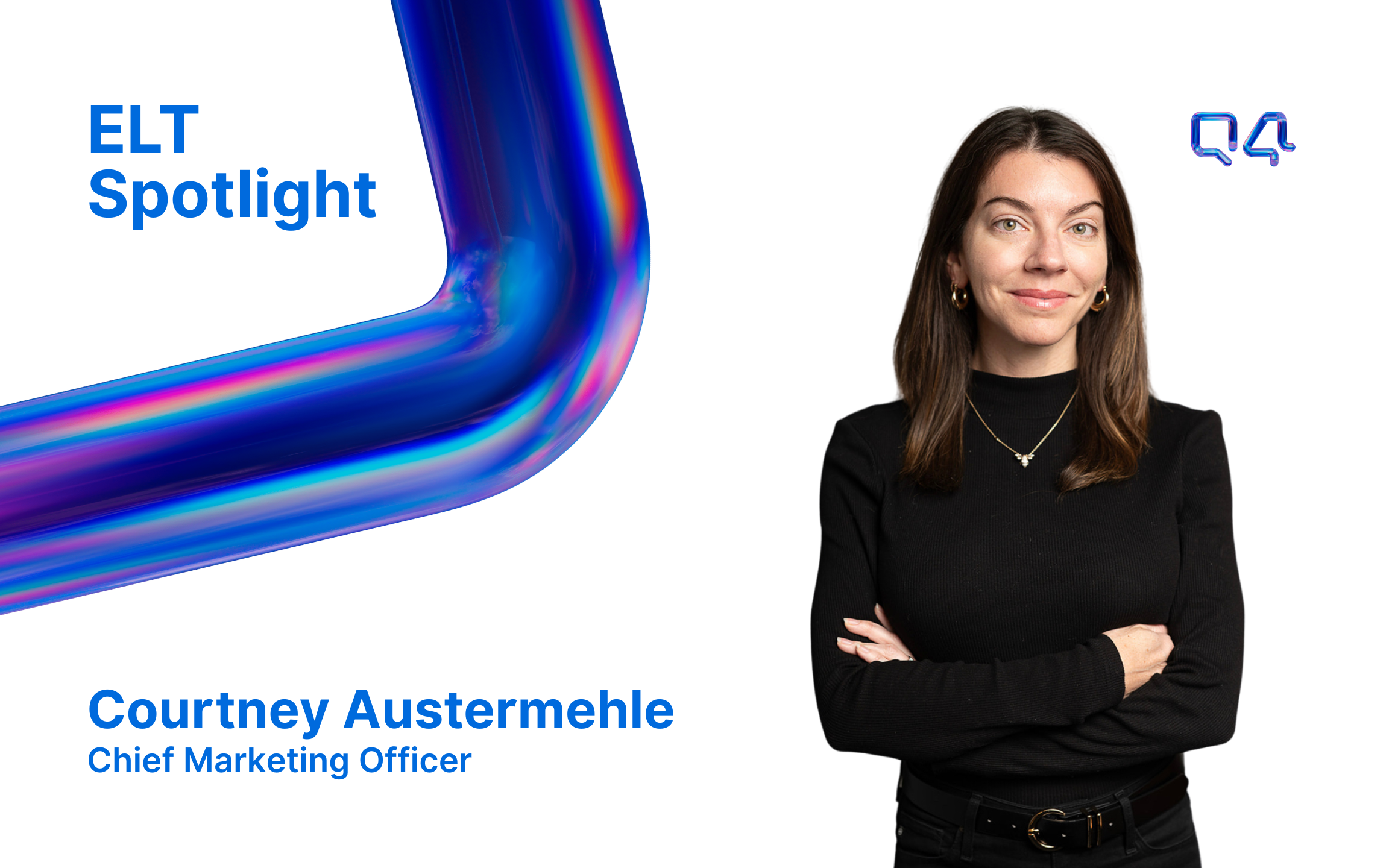
In the second edition of our ELT Spotlight series, we interview Courtney Austermehle, Q4’s Chief Marketing Officer, to discuss her perspective on...