5 min read
Event Recap: Modern Consensus Management at CIRI Senior IRO Leadership Day
Ask any IRO about consensus and you'll hear the same frustration. A group of analysts builds forecasts on your...
3 min read

Imagine an institutional investor is researching your company’s Q1 performance. Instead of navigating to your IR website, they ask ChatGPT or Perplexity: “How is this company’s growth strategy shifting toward ESG, and what were the key takeaways from their last earnings call?”
Imagine an institutional investor is researching your company’s Q1 performance. Instead of navigating to your IR website, they ask ChatGPT or Perplexity: “How is this company’s growth strategy shifting toward ESG, and what were the key takeaways from their last earnings call?”
In seconds, the AI generates a polished, authoritative paragraph. But where did that information come from?
It might be a snippet from a third-party aggregator, a competitor’s commentary, or even an outdated news article from years ago. As AI-powered answer engines become the go-to research assistants for the capital markets, the traditional “click-to-website” journey is changing.
As AI becomes a primary source of investor insight, investor relations officers (IROs) need new ways to manage how their story is interpreted and repeated. Below, we break down how answer engines are changing investor research, what it takes to make sure your information shows up accurately, and how Q4 supports that effort.
The way information is consumed is undergoing a significant transformation. According to recent research from Bain & Company, we are moving to a zero-click reality:
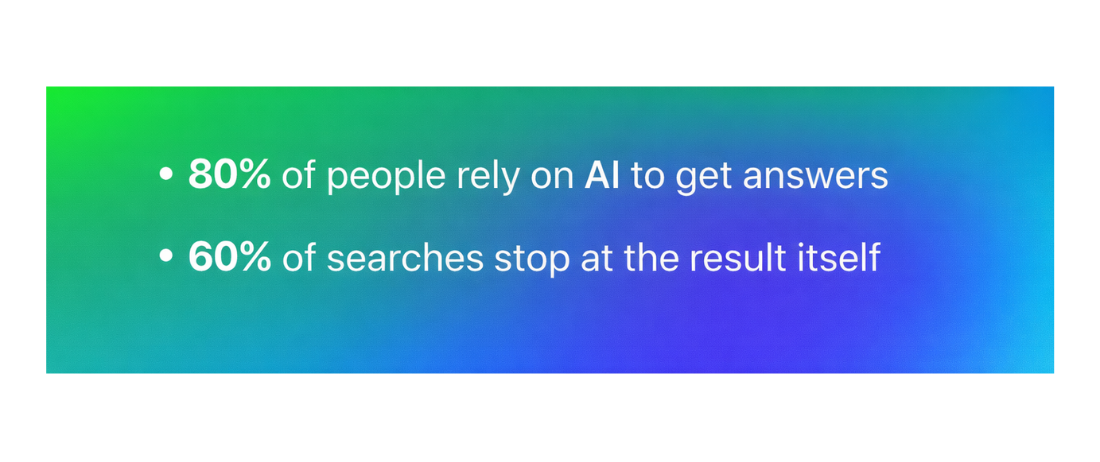
For the IR community, narrative control now depends on how this is addressed. Institutional investors are already using GenAI to summarize financial news, compare performance across firms, and conduct deep research on new investment ideas. If your primary IR materials aren’t easily “readable” by these machines, the AI might fill the gaps with less accurate sources.
Today’s IR website must be built for machine interpretation as well as human readers. This is where Answer Engine Optimization (AEO) comes into play.
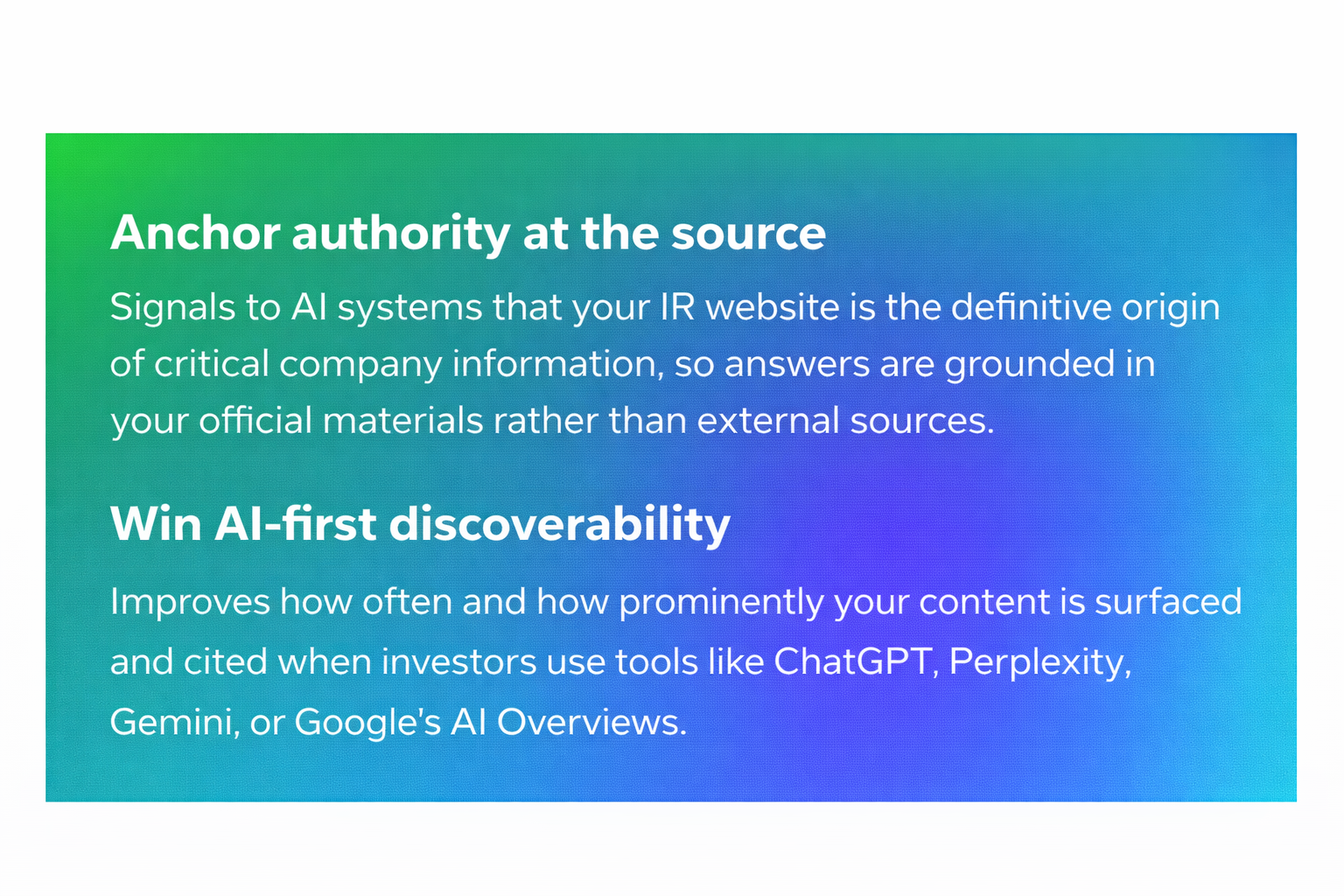
AEO ensures your official disclosures are the primary and most trusted sources AI tools cite. By using structured data, or schema, you can essentially highlight key information for AI tools. This backend “highlighter” helps AI systems recognize your press releases, earnings events, and leadership bios as the verified source of truth.
When your content is optimized for these systems, it helps:
To meet this new mandate, Q4 introduced AEO for IR Web, giving public companies a way to get your IR materials front and center in the AI discovery landscape
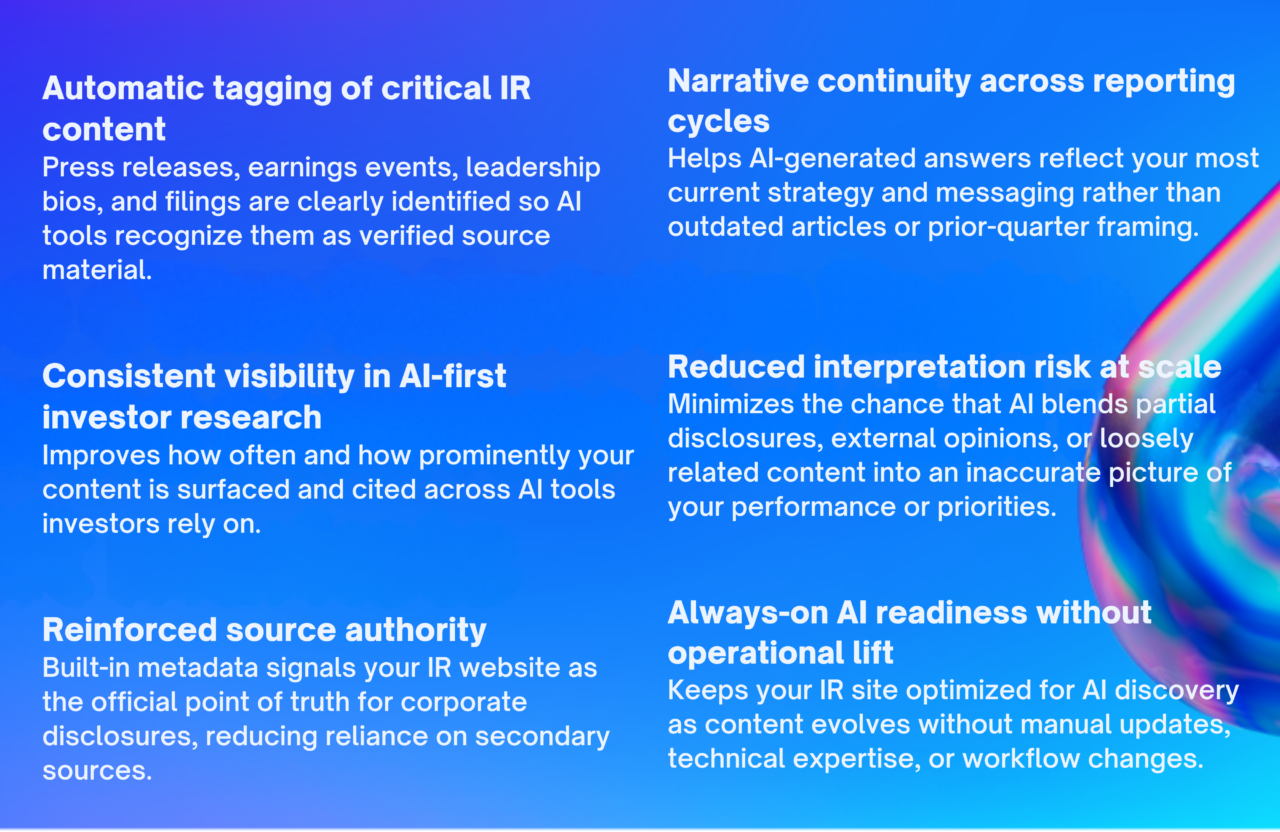
AEO for IR Web is designed to ensure that when AI systems summarize your earnings, ESG priorities, or leadership narrative, they are drawing directly from your official disclosures, instead of inferred context or third-party interpretations. It does this by making your IR content machine-readable and continuously AI-ready with a foundational step of automated schema optimization. And this is done without adding manual work or technical burden to your team.
When your content is optimized through AEO for IR Web, you gain:
The core mission of IR hasn’t changed. You are still the storyteller, the strategist, and the guardian of the company’s reputation. What has changed is the medium through which your audience hears that story.
By embracing AEO, IR teams take a more proactive role in how their information is represented in AI-mediated research. So when an investor asks an AI about your company, the answer they get is the one you intended to give. It’s about being easy to find and impossible to misinterpret.
As you look toward your next earnings cycle, consider how your materials appear to an AI. Is your story being told by you, or is it being pieced together by an algorithm looking for the path of least resistance?